Public feels positively about dead and decaying trees, finds new research
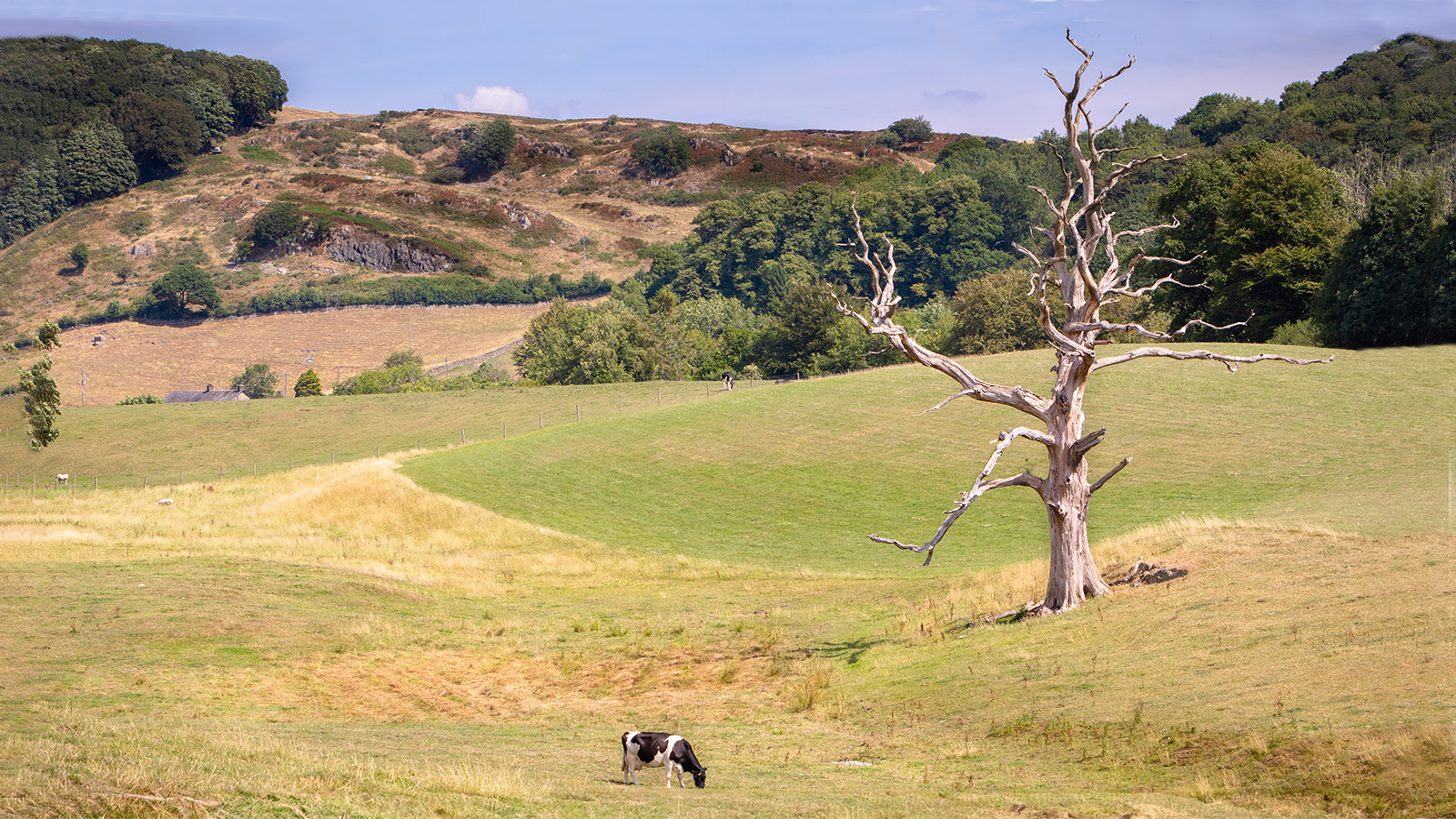
Three-quarters of visitors felt neutral, happy, or very happy about a visible dead or decaying tree.

Dead and decaying trees are important for biodiversity and many other reasons, but site managers are often unsure what visitors think about them.
Scientists at Forest Research surveyed nearly 1200 visitors across three locations that varied in formality – landscaped Stowe Gardens in Buckinghamshire, wood pastures at Rydal in the Lake District, and the rewilding project at the Knepp Estate in West Sussex – to understand what they thought about dead and decaying trees in the landscape. At each location there was at least one dead or decaying tree visible during the survey.
The research found that three-quarters of respondents felt neutral, happy, or very happy when asked how they felt about a visible dead or decaying tree. Visitors to the most formal site felt the least positive but were still more positive than negative overall.
‘The results from our survey should reassure site managers that leaving dead and decaying trees in place, and even celebrating them, will positively contribute to visitor experience,’ said Dr Beth Brockett, Senior Social Scientist at Forest Research.
Visitors were most likely to notice the positive attributes of dead and decaying trees like shape, structure, patterns, regrowth, things growing on the trees, and how they contrasted with living or healthy trees. Nearly half of respondents agreed that such trees made them feel creative and inspired.
The vast majority of visitors didn’t think dead or decaying trees should be removed. Visitors to less formal, wilder sites and those who had a stronger relationship with nature were less likely to believe the trees should be removed. Of the visitors surveyed, almost two-thirds thought more dead and decaying trees should be left in the landscape to decay in place.
Nearly a quarter of visitors mentioned three or more environmental benefits of dead and decaying trees. However, 16% of respondents were unable to list any environmental benefits.
Those with the least knowledge were more likely to feel negatively about dead and decaying trees, to be concerned about the risks they pose, and to believe that such trees should be removed. Knowledge levels also affected what people noticed about dead/decaying trees, how much they valued them, and what they valued about them.
‘Our findings suggest that investing in communication with those least knowledgeable about dead and decaying trees could have a big impact on visitor support for leaving trees to decay in place,’ said Dr Brockett.
For more information and to read the report in full, visit Understanding the Social & Cultural Value of Trees outside Woodlands: Peri-Urban and Rural (ToWPUR) – Forest Research
A new national map showing the location of trees outside of woodlands across Wales is now available for the first time.
Two new appointments to the committee strengthen independent scientific advice for UK forestry.

On 17 February 2026, the Knowledge Exchange Network for the Large-scale Ecosystem Recovery Network (LERN) was launched at Harold’s Park Wildland in Essex.
A new national map showing the location of trees outside of woodlands across Wales is now available for the first time.
Two new appointments to the committee strengthen independent scientific advice for UK forestry.
On 17 February 2026, the Knowledge Exchange Network for the Large-scale Ecosystem Recovery Network (LERN) was launched at Harold’s Park Wildland in Essex.